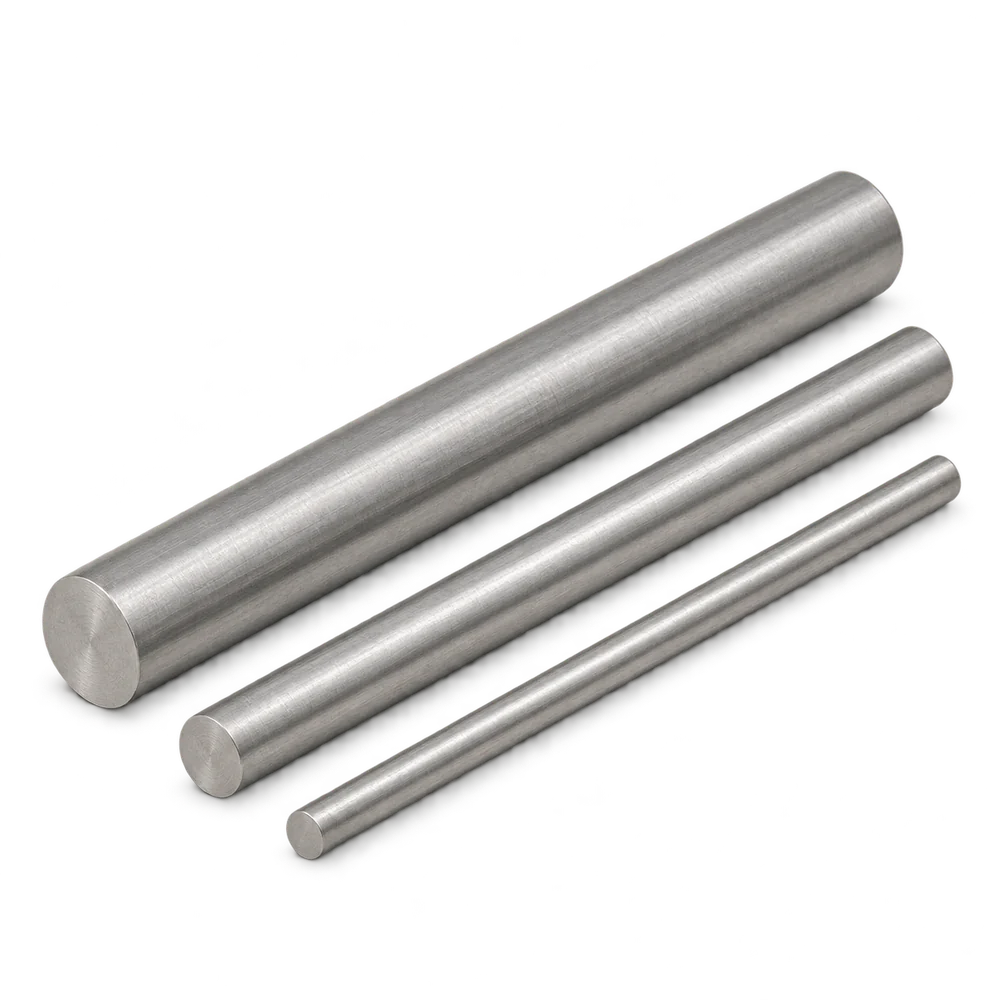
Rods & cylinders
State the diameter, length, finished faces and pole direction. Show the part in its working magnetic circuit.
Discuss this form

Iron–chromium–cobalt alloy
Machinable alloy forms, specified for the finished magnetic circuit.
FeCrCo is an iron–chromium–cobalt permanent-magnet alloy family. It can be formed or machined in an appropriate processing condition, then developed to the required magnetic properties through controlled treatment. The processing route is part of the specification.
Send a drawing with the required pole arrangement, working gap, field requirement and operating conditions. Magnetstek reviews the material condition, geometry and inspection requirements before confirming the proposed part and quotation.
Request a FeCrCo quotePrepare your drawing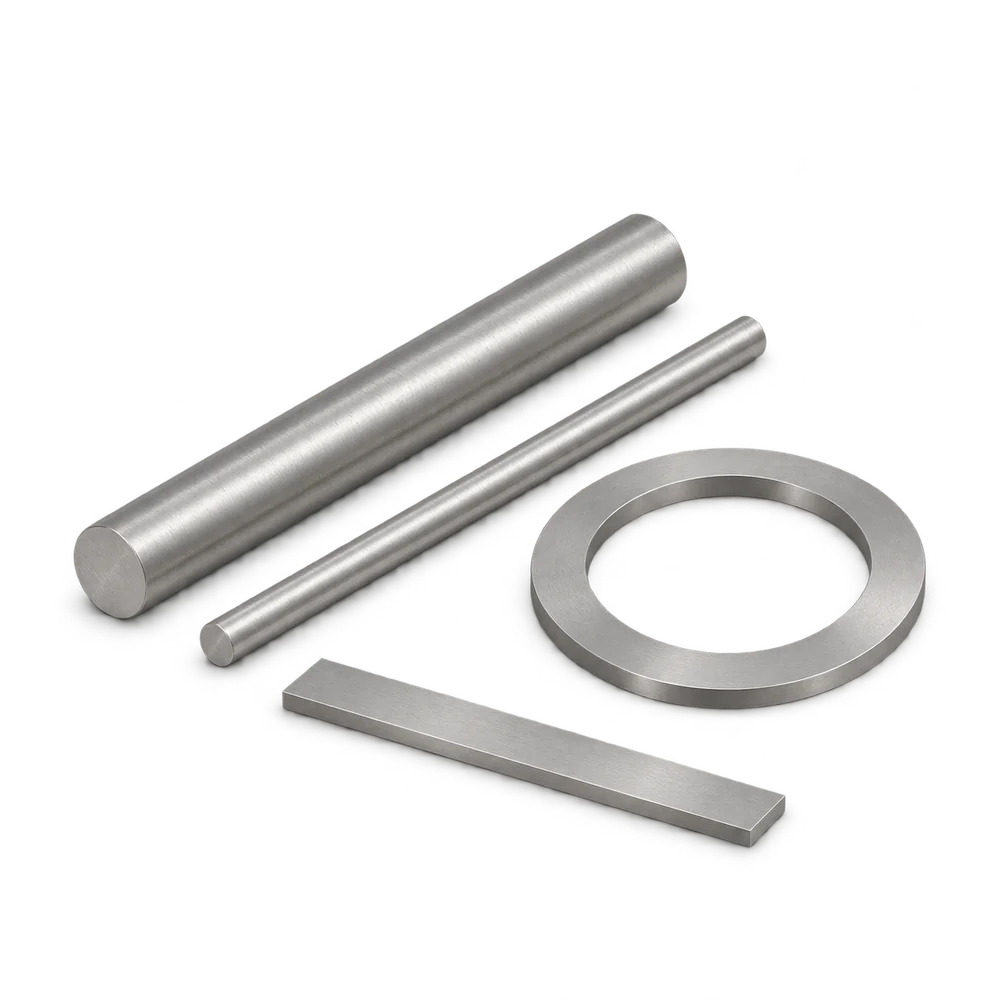
Define the form, material condition and magnetic acceptance together.
Start with the part
These forms are starting points for a drawing review. The proposed grade and process determine which geometry and magnetic properties can be agreed.
State the diameter, length, finished faces and pole direction. Show the part in its working magnetic circuit.
Discuss this form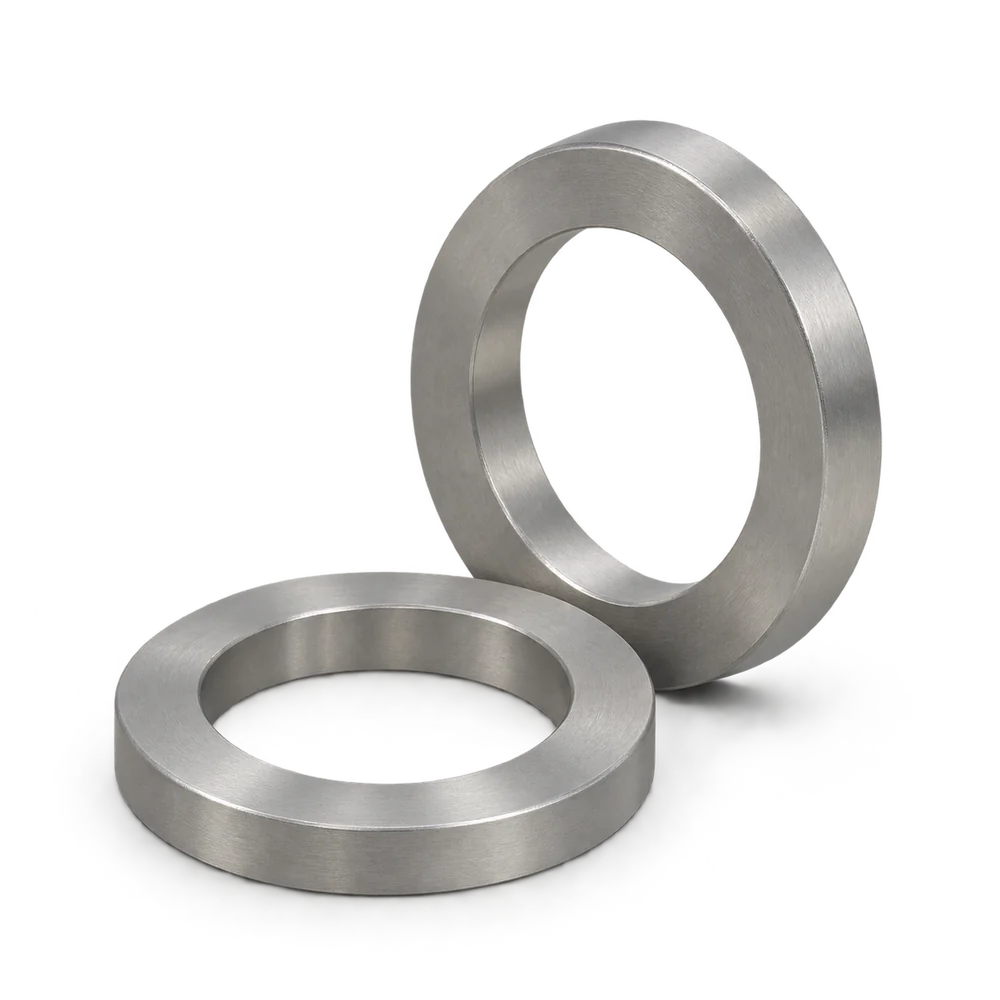
Provide the bore, wall thickness, critical fits and pole pattern. Identify any features that must be formed before magnetic treatment.
Discuss this form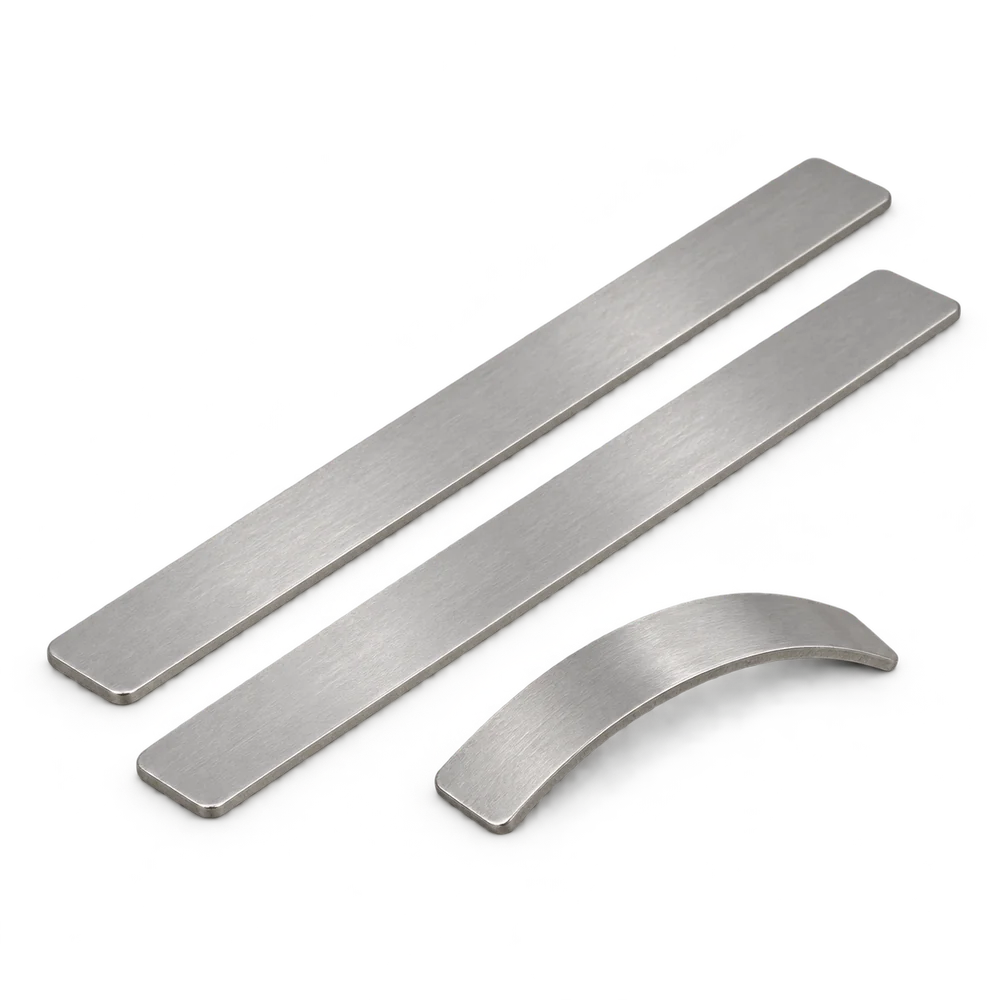
Specify thickness, bend geometry, surface condition and magnetic function. Review the order of forming, treatment and final magnetization.
Discuss this formAI concept illustrations, not photographs of supplied parts. Finish and proportions are illustrative.
Drawing-based inquiry
Supply the revision, datums, tolerances and required surface condition. Mark thin sections, holes, bends and critical mating faces.
Identify a required designation or governing material specification. State the requested delivery condition and any fixed processing restrictions.
Give the target field, flux or other magnetic requirement together with the location, working gap and surrounding components.
Mark the poles and reference direction. Clarify whether the part is delivered magnetized and how the orientation will be checked.
Specify continuous and peak temperatures, exposure time, opposing fields, vibration and environmental contact.
Provide sample and production quantities, required records, acceptance method, allowed variation and destination.
Material and manufacturing sequence
Review machining, forming and any intermediate treatment for the selected alloy condition. Do not assume a finished magnetic part can be reworked without changing its properties.
Magnetic heat treatment and aging establish the intended material behavior. The grade and processing history determine the applicable treatment; this is separate from charging the finished part.
Agree the final magnetization method, pole arrangement and assembly sequence. Verify the finished part using the specified fixture and acceptance conditions.
Arnold’s FeCrCo alloy reference describes machining before magnetic heat treatment for its specified alloy. Use this as process context; confirm the route for the proposed Magnetstek part.
Grade selection
A FeCrCo grade label alone does not define a finished magnet. Request the applicable material designation, magnetic condition and measured property limits. Review the demagnetization or hysteresis data relevant to the proposed application.
Distinguish remanence, coercivity and energy product. Compare matching units, test temperatures and material conditions. Do not treat a material value as the field delivered in your assembly.
Specify the actual measurement position, gap, fixture and acceptable range. Geometry and the surrounding magnetic circuit can change the operating point and retained output.
Numerical grade limits and dimensional capability are confirmed from the applicable product data and quotation. This page does not substitute for those records.
Engineering reference
FeCrCo combines a machinable alloy form with magnetic properties developed by its processing history. The machining condition and the final magnetic condition are not interchangeable. Confirm when cutting, forming, heat treatment and magnetization occur.
Review any rework with the proposed material and processing condition first. Later machining or forming can affect dimensions, stresses and magnetic behavior. Specify all required features before approving the manufacturing route.
Processing can be used to develop different magnetic behavior within a material family. It does not mean the final customer can select any coercivity from a generic range. Agree the grade, process condition, test method and acceptance limits for the order.
Give the continuous temperature, short peaks, exposure duration and cycling. Review the applicable curves and acceptable change in the actual circuit. Curie temperature is different from an allowable operating temperature and does not qualify the finished assembly.
Identify the fixture, part orientation, measurement location, gap, temperature and allowed range. A free-space surface reading and a measurement in the assembly answer different questions. Agree the sampling and records before production.
Describe humidity, chemicals, cleaning, contact materials and storage conditions. Agree the finished surface or protective system for the proposed alloy. A silver-grey appearance does not establish corrosion resistance or a particular coating.
Sensors, instruments, relays and compact magnetic components can motivate a FeCrCo review when the required form or magnetic response suits the alloy. Define the function and acceptance test. An application name alone does not establish suitability or qualification.
Compare the complete design if the required coercivity, field, geometry or temperature behavior is outside the proposed FeCrCo solution. Evaluate AlNiCo, NdFeB or SmCo using the same working gap, mounting and test conditions rather than a material-name ranking.
External references explain general material behavior. Their product data and manufacturing capability are not Magnetstek supply specifications.
From drawing to quotation
Step 1
Provide the drawing, intended magnetic function, environment and quantities.
Step 2
Agree the grade, machining condition, magnetic treatment and final magnetization with the proposed part.
Step 3
Check the drawing revision, inspection method, supplied records, packaging and commercial terms before ordering.
Minimum order, tooling, availability and delivery timing are confirmed in the part-specific quote.
Review NdFeB for the required field, geometry and environment.
View details →Review SmCo using grade-specific temperature and magnetic conditions.
View details →Include mating steel, retention and the complete magnetic circuit.
View details →Check the scope of the existing quality management certificate.
View details →