Introduction
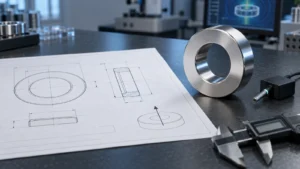
Arc magnets are curved segments used in circular magnetic assemblies, including some motor and generator designs. For an NdFeB arc segment, specify inner and outer radii, arc angle, axial length, magnetization direction, grade, coating, operating temperature and tolerances. This guide explains these choices and the drawing details needed for a project quote. For examples of arc pole orientations, see K&J Magnetics’ magnetization guide.
What Are Arc Magnets?
Arc magnets, or arc segments, are curved permanent-magnet pieces for circular assemblies. Their inner and outer radii, arc angle and axial length determine mechanical fit, while the specified magnetization direction determines pole orientation. Neodymium-iron-boron (NdFeB) is one material option; review the grade, coating and temperature limit against the magnetic circuit and operating environment.
The Power of Neodymium Arc Magnets
NdFeB arc segments can be arranged around a rotor or another circular assembly. The field at the working gap depends on segment geometry, grade, magnetization direction, pole layout and surrounding materials. Specify the field target and measurement location when these matter, and verify the proposed design under the actual assembly conditions.
Applications of Arc Magnets
Arc Magnets find applications in a variety of fields, from industrial manufacturing to high-tech innovations. Here are some of the key areas where these powerful magnets are making a significant impact:
1.Electric Motors and Generators: The curved shape of Arc Magnets allows them to fit perfectly into the stators and rotors of electric motors and generators, enhancing their efficiency and performance.
2.Magnetic Bearings: Arc Segment Magnets are used in magnetic bearing systems to provide frictionless motion, reducing wear and tear and extending the lifespan of the equipment.
3.Research magnet assemblies: Permanent-magnet layouts are studied for some low-field MRI systems, but an NdFeB arc segment must be evaluated within the complete magnetic circuit for field uniformity, geometry, retention, and safety. Its shape and strength alone do not qualify it for clinical MRI use. See this low-field MRI review.
4.Wind Turbines: Strong Neodymium Arc Segment Magnets are used in the generators of wind turbines to convert mechanical energy into electrical energy efficiently.
5.Automotive Industry: These magnets are used in various automotive applications, including hybrid and electric vehicle motors, sensors, and actuators, contributing to the advancement of modern automotive technology.
Advantages of Using Arc Magnets
The use of Arc Magnets, especially Neodymium Arc Magnets, comes with several advantages:
1.High Magnetic Strength: Neodymium Arc Magnets are the strongest type of permanent magnets available, providing exceptional magnetic force in a compact form.
2.Versatility: The curved shape of Arc Magnets allows them to be used in a wide range of applications, from industrial machinery to cutting-edge medical devices.
3.Durability: These magnets are highly resistant to demagnetization and can maintain their magnetic properties over time, ensuring long-lasting performance.
4.Efficiency: The strong magnetic field generated by Neodymium Arc Magnets enhances the efficiency of electric motors and generators, leading to improved performance and energy savings.
5.Customizability: With the ability to create Custom Neodymium Magnets, you can tailor these magnets to meet the exact specifications of your application, ensuring optimal functionality.
The Science Behind Neodymium Arc Magnets
Understanding the science behind Neodymium Arc Magnets is key to appreciating their incredible capabilities and widespread applications. These magnets are crafted from an alloy composed of neodymium, iron, and boron, forming what is known as NdFeB magnets. This specific composition is what gives Neodymium Arc Magnets their exceptional strength, making them the most powerful type of permanent magnets available on the market.
Preparation of the Alloy
The process begins with the preparation of the alloy. Raw materials—neodymium, iron, and boron—are meticulously measured and melted together. This molten mixture is then cast into molds to form ingots, which are subsequently cooled and solidified. The resulting alloy possesses the intrinsic magnetic properties necessary for the creation of Neodymium Arc Magnets.
Milling and Pressing
Once the alloy is prepared, it undergoes a milling process where it is ground into a fine powder. This powder is then pressed into the desired shape using a technique known as powder metallurgy. For Arc Magnets, the powder is pressed into a curved mold, creating the distinctive arc shape that fits seamlessly into various applications such as motors and generators.
Sintering
After pressing, the molded powder is subjected to a process called sintering. This involves heating the pressed powder in a furnace at high temperatures, just below its melting point. Sintering causes the particles to fuse together, resulting in a dense and solid magnet. This step is crucial as it enhances the magnetic properties and structural integrity of the magnet.
Coating
To ensure durability and longevity, Neodymium Arc Magnets are coated with a protective layer. Common coatings include nickel, zinc, or epoxy. This coating serves to protect the magnet from corrosion and oxidation, which can degrade its performance over time. The choice of coating depends on the specific application and environmental conditions in which the magnet will be used.
Magnetization
The final step in the manufacturing process is magnetization. The sintered and coated magnet is exposed to a strong magnetic field, which aligns the magnetic domains within the material. This alignment is what gives Neodymium Arc Magnets their powerful magnetic field. The strength and direction of this field are critical for the magnet’s performance in its intended application.
Tailoring to Specific Needs
What makes Neodymium Arc Magnets truly remarkable is the ability to customize them to meet specific requirements. By adjusting the composition of the alloy, the shape of the mold, the sintering conditions, and the type of coating, manufacturers can produce magnets with tailored magnetic properties. This level of customization is essential for applications that demand precise magnetic performance.
At MagnetsTek, we specialize in creating Custom Neodymium Magnets that meet the unique needs of our clients. Whether you require a specific shape, size, or magnetic strength, our team of experts can design and manufacture magnets that deliver optimal performance. Explore our range of custom solutions and see how we can help you achieve your goals with the power of Neodymium Arc Magnets.
Choosing the Right Arc Magnets for Your Needs
When selecting Arc Magnets for your application, it’s important to consider several factors:
Magnetic Strength: Determine the required magnetic strength for your application to ensure optimal performance.
Size and Shape: Choose the appropriate size and shape of the magnet to fit seamlessly into your device or assembly.
Coating and Durability: Consider the environmental conditions in which the magnet will be used and choose a suitable coating to prevent corrosion and enhance durability.
Custom Specifications: If your application has unique requirements, consider opting for Custom Neodymium Magnets to ensure the perfect fit and functionality.
Advancements in Arc Magnet Technology
The field of magnet technology is constantly evolving, with new advancements and innovations emerging regularly. Recent developments in the production and application of Arc Magnets include:
Improved Manufacturing Techniques: Advances in manufacturing processes have led to higher precision and consistency in the production of Arc Magnets, resulting in better performance and reliability.
Enhanced Magnetic Properties: Ongoing research and development efforts are focused on enhancing the magnetic properties of Neodymium Arc Magnets, making them even more powerful and efficient.
Eco-friendly Solutions: As environmental concerns continue to rise, there is a growing emphasis on developing eco-friendly manufacturing processes and materials for Arc Magnets.
Integration with Smart Technologies: The integration of Arc Magnets with smart technologies, such as IoT devices and sensors, is opening up new possibilities for advanced applications and improved functionality.
Custom Neodymium Magnets: Tailored Solutions for Every Industry
At MagnetsTek, we specialize in providing Custom Neodymium Magnets that meet the specific needs of various industries. Our team of experts works closely with clients to design and manufacture magnets that deliver optimal performance and reliability. Whether you’re in the automotive, medical, or renewable energy sector, our Custom Neodymium Magnets can help you achieve your goals.
Conclusion
Select neodymium arc segments for the magnetic circuit and mechanical fit. Confirm inner and outer radii, arc angle, axial length, pole orientation, grade, coating, operating temperature, tolerances and the required inspection method. Share the assembly drawing and any working-gap field target through the inquiry form for a project quote.
For material and coating options, see our Custom Neodymium Magnets page. Include quantity and any pairing or assembly requirements in the RFQ.