

1. Introduction: Why N38UH Matters in Real Engineering
In magnet selection, many engineers initially focus on maximum magnetic strength (e.g., N52). However, in real-world applications—especially in motors, vacuum systems, and industrial automation—temperature stability often matters more than peak magnetic performance.
This is where N38UH NdFeB magnets stand out.
Unlike standard grades, N38UH is specifically engineered to maintain magnetic performance under elevated temperatures (up to ~180°C) while offering reliable, balanced magnetic output. It is widely used in demanding environments where failure due to demagnetization is unacceptable.
2. What Is N38UH? (Full Technical Breakdown)
N38UH belongs to the family of
Neodymium Iron Boron (NdFeB) Magnet, the strongest commercially available permanent magnets.
2.1 Grade Structure Explained
| Component | Meaning |
|---|---|
| N38 | Maximum energy product ≈ 38 MGOe |
| UH | Ultra High temperature grade (~180°C max working temp) |
2.2 Key Magnetic Properties (Typical Range)
| Property | Value |
|---|---|
| Br (Remanence) | 1.20 – 1.26 T |
| Hcj (Intrinsic Coercivity) | ≥ 20 kOe |
| BHmax | 36 – 39 MGOe |
| Max Operating Temp | ~180°C |
👉 The high coercivity (Hcj) is the critical factor that prevents irreversible demagnetization at elevated temperatures.
3. Why High-Temperature Magnets Are Critical
3.1 The Hidden Problem: Thermal Demagnetization
At elevated temperatures:
- Magnetic domains become unstable
- Coercivity decreases
- Irreversible loss can occur
This is a fundamental limitation of NdFeB materials.
3.2 What Happens If You Choose the Wrong Grade?
Example:
- Using N52 (80°C limit) in a 150°C motor
👉 Result: Permanent loss of magnetic strength (non-recoverable)
3.3 Why N38UH Solves This
N38UH is engineered with:
- Higher Dy (Dysprosium) / Tb (Terbium) doping
- Improved grain boundary structure
- Enhanced coercivity
👉 Result: Stable magnetic performance at high temperatures
4. N38UH vs Other Grades (Real Selection Logic)
4.1 Comparison Table
| Grade | Magnetic Strength | Max Temp | Typical Use |
|---|---|---|---|
| N35 | Low | 80°C | General use |
| N52 | Very High | 80°C | Room temp applications |
| N38SH | Medium | 150°C | Industrial motors |
| N38UH | Medium | 180°C | High-temp motors |
| N38EH | Medium | 200°C | Extreme conditions |
4.2 Engineering Decision Rule
👉 Use this simple logic:
- Temperature < 80°C → prioritize BHmax (e.g., N52)
- Temperature 120–180°C → prioritize coercivity (e.g., N38UH)
- Temperature > 180°C → consider SmCo
5. Typical Applications of N38UH Magnets
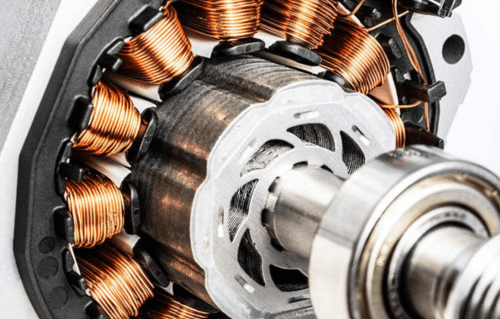
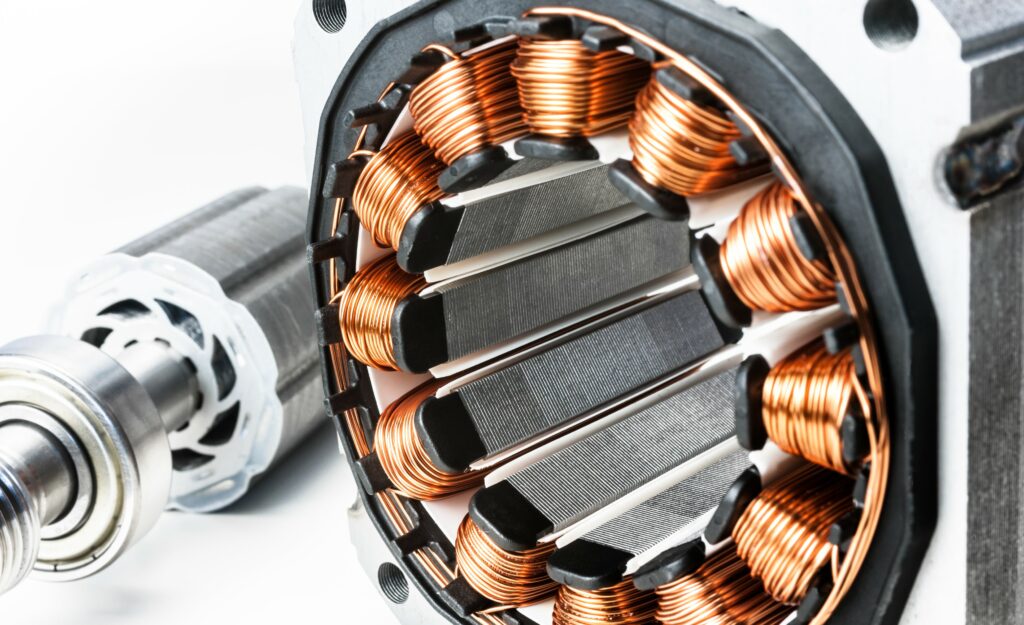
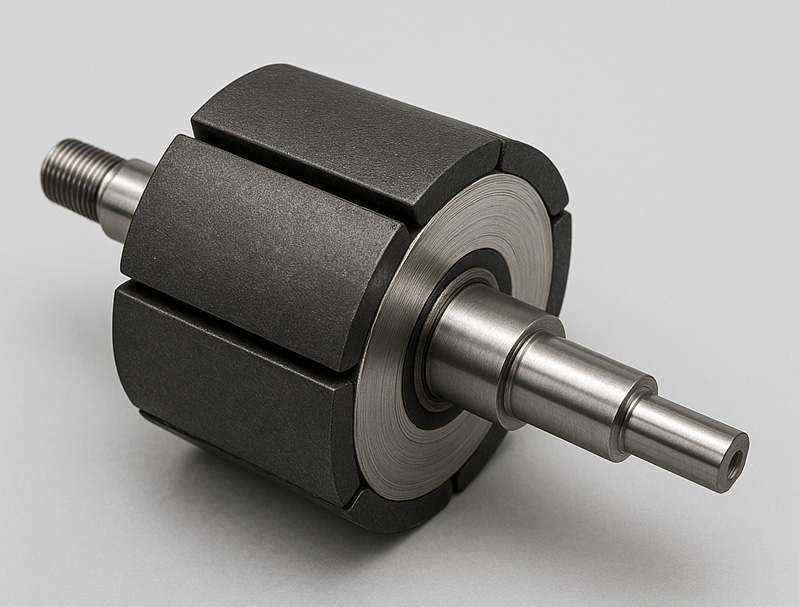
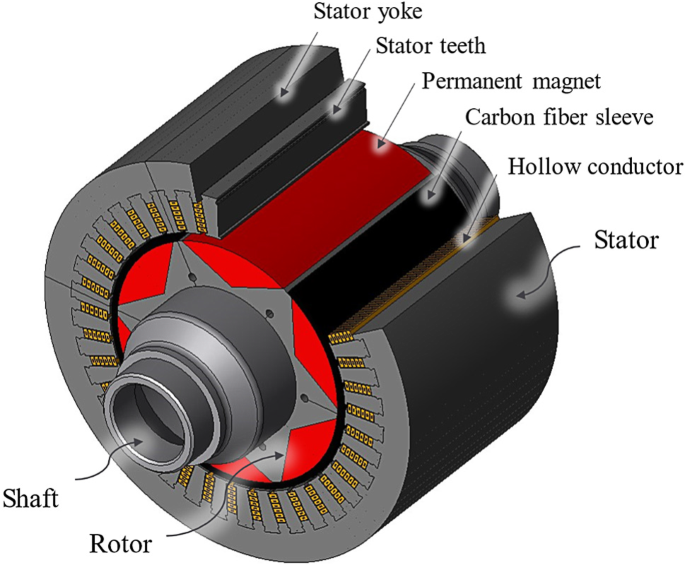
5.1 Electric Motors (Key Application)
4
- EV motors
- Servo motors
- High-speed rotors (e.g., 7000+ rpm)
👉 Why N38UH:
- Stable under heat generated by copper losses and eddy currents
- Prevents torque degradation
5.2 Magnetic Couplings & Pumps
- Chemical pumps
- Vacuum systems
- Sealed drive systems
👉 Benefits:
- No contact transmission
- Reliable at elevated temperatures
5.3 Aerospace & High-End Equipment
- Actuators
- Sensors
- Control systems
👉 Requirement:
- Zero failure tolerance
- High thermal stability
5.4 Industrial Automation
- Robotics
- Conveyor systems
- High-load environments
👉 Advantage:
- Long service life
- Reduced maintenance
6. Manufacturing Considerations Behind N38UH
6.1 Material Composition
N38UH is not just a “label”—it reflects:
- Rare earth composition tuning
- Heavy rare earth addition (Dy/Tb)
- Grain boundary diffusion technology
6.2 Trade-Off: Performance vs Cost
| Factor | Impact |
|---|---|
| Dy/Tb content | ↑ cost |
| Coercivity | ↑ |
| Magnetic strength | Slight ↓ vs N52 |
👉 This is why N38UH is a “balanced engineering solution”
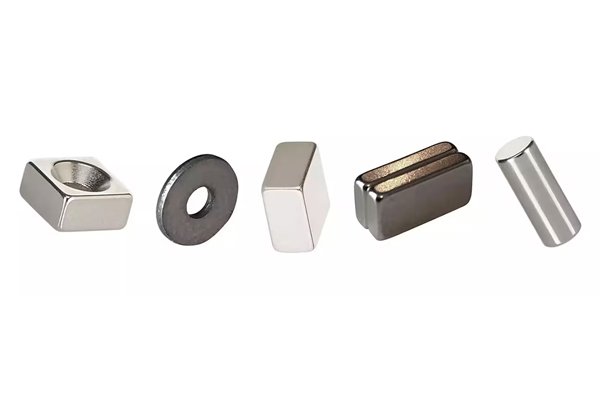
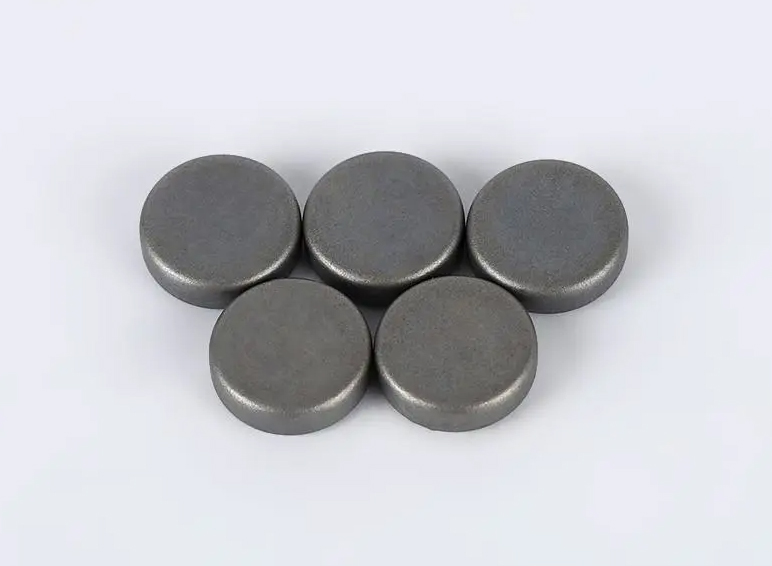
7. Coating and Surface Protection (Critical but Often Ignored)
4
NdFeB magnets are highly prone to corrosion, especially at high temperatures.
Common coatings:
| Coating | Use Case |
|---|---|
| Ni-Cu-Ni | General purpose |
| Epoxy | High humidity / harsh environments |
| Phosphate | Cost-sensitive applications |
👉 In high-temperature applications, Epoxy is often preferred.
8. Design Tips for Engineers (Practical Insights)
8.1 Avoid Operating at Max Limit
- Recommended:
Use ≤ 80–85% of rated temperature
👉 For N38UH:
- Ideal working range: ≤150–160°C
8.2 Consider Demagnetization Curve
- Always check B-H curve under temperature
- Not just room-temperature specs
8.3 Mechanical Constraints Matter
- NdFeB is brittle
- High-speed applications require:
- Sleeves (e.g., titanium, carbon fiber)
- Structural reinforcement
8.4 Magnet Assembly Design
- Halbach arrays
- Segmented arc magnets
- Radial magnetization
👉 N38UH is widely used in these configurations
9. When NOT to Use N38UH
Despite its advantages, N38UH is not always optimal.
Avoid if:
- Temperature exceeds 180–200°C
- Extreme corrosion environment without proper coating
- Budget is highly constrained
👉 Alternative:
- Samarium Cobalt (SmCo) Magnet
10. Conclusion: The Engineering Value of N38UH
N38UH is not about maximum strength—it is about reliability under stress.
It offers:
- Balanced magnetic performance
- High thermal stability
- Proven industrial reliability
👉 In real engineering systems, this balance often delivers better long-term performance than higher-grade magnets like N52.
You May Also Want to Know (FAQs)
1. Is N38UH stronger than N52?
No. N52 has higher magnetic strength, but N38UH performs better at high temperatures.
2. What is the maximum temperature for N38UH?
Approximately 180°C, but recommended continuous use is below 160°C.
3. Why is N38UH more expensive than N38?
Because it contains heavy rare earth elements (Dy/Tb) to improve coercivity.
4. Can N38UH be used in vacuum environments?
Yes, but proper coating and outgassing considerations are required.
5. What coating is best for high temperature?
Epoxy or specialized high-temperature coatings.
6. Does N38UH lose magnetism permanently?
Only if operated beyond its thermal or demagnetization limits.
7. Is N38UH suitable for EV motors?
Yes, it is widely used in high-performance motors.
8. What is the difference between UH and EH?
EH has even higher temperature resistance (~200°C).
9. Can N38UH be custom-shaped?
Yes—blocks, rings, arcs, and assemblies are all possible.
10. Should I always choose UH grade?
No—only when your application requires high-temperature stability.